



Seasonal Feature: Blood Oranges
What
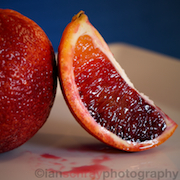
If you don’t have any blood oranges on hand, rush over to your local market and grab as many as you can carry. Only available from December through May, the blood orange is smaller than the average orange, sweeter and less acidic. Its deep orange skin boasts a crimson blush and the characteristic blood-red flesh tastes faintly of raspberries. Fruit experts believe the blood orange could be a cross between a pomelo and a tangerine that originated in Sicily. But ones found in your grocery store probably hail from Texas or California.
Why Try
Like other citrus fruits, blood oranges are high in Vitamin C, about 130% of your daily recommended allowance The brilliant red color comes from anthocyanin, a pigment commonly found in flowers but rarely in fruit. It’s also a powerful antioxidant. One medium orange contains 69 calories, zero fat, 260 milligrams of potassium (15% of your daily allowance), and 28% percent of your daily fiber intake. And if that isn’t enough, they also contain iron, calcium, and Vitamin A. Carry then in your gym bag, stash them in your car, and hide a few in your desk drawer.
How to Buy and Store
Look for blood oranges with tight, orange or red skin that feel heavy for their size. Keep them on your countertop and don't refrigerate them.
How to Use
The simplest ways to use blood oranges is to eat them or turn them into fresh-squeezed juice. But here are a few other suggestions:
- Dress up your cocktails by mixing fresh squeezed juice with Prosecco, vodka or tequila.
- Swap out blood oranges for regular oranges in your favorite marmalade recipe.
- Toss segments with butter lettuce, avocado and a little vinaigrette.
- Make a granita by mixing juice, zest a bit of water and sugar to taste. Place in a shallow metal pan and into the freezer. Scrape every 15 minutes or so with the tines of a fork until mixture is light and flakey. Eat right away.
- Add segments to thinly sliced fennel and a little lemon olive oil.